
Real reactions
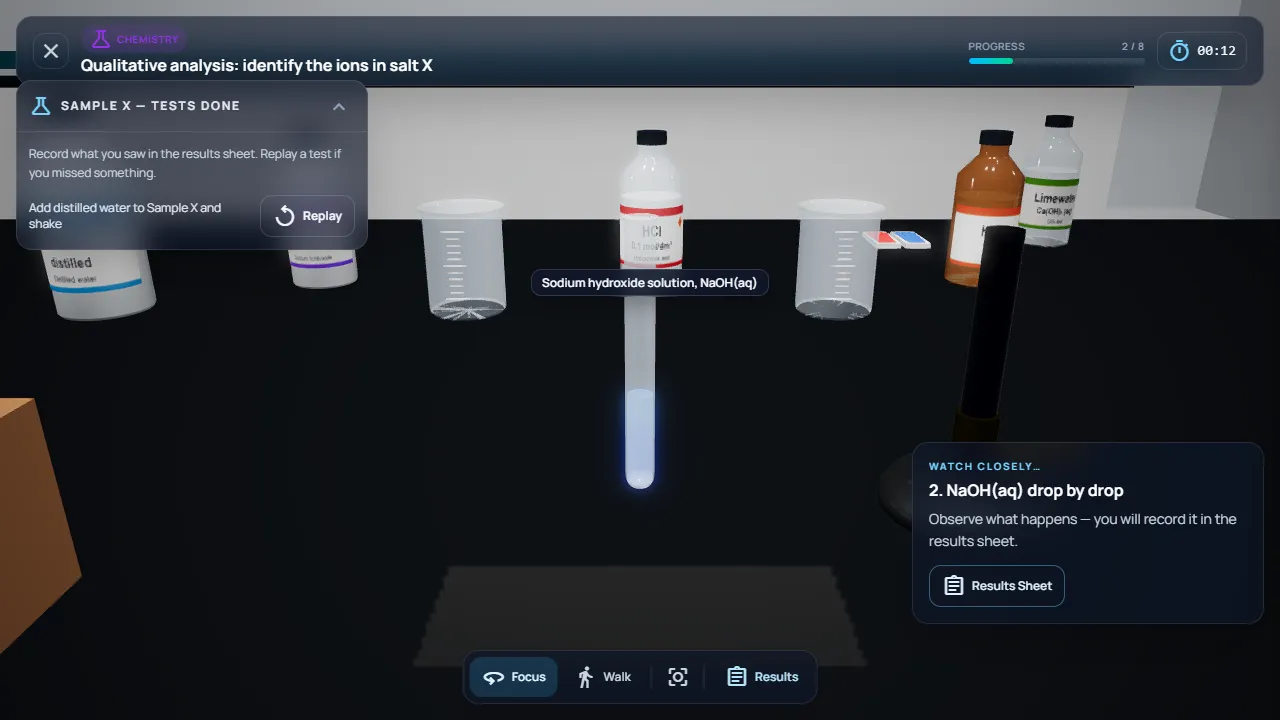
Colour changes, precipitates, gases and gas tests follow the chemistry, not a script of clicks.
EduMatrix Practical Lab is a 3D virtual science laboratory for Chemistry and Physics practicals. Students titrate to a real end point, watch precipitates form, time a swinging pendulum and read meters, then fill in a results sheet that is marked automatically, the way WAEC and NECO practicals are assessed.
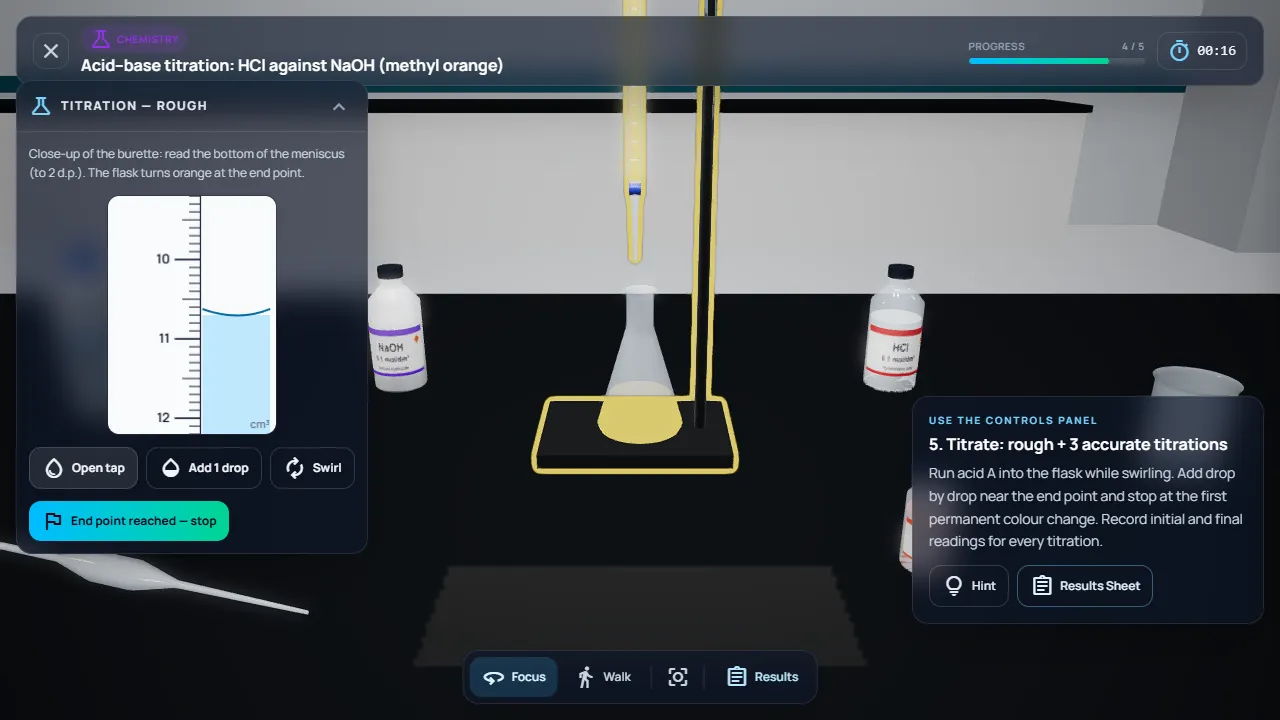
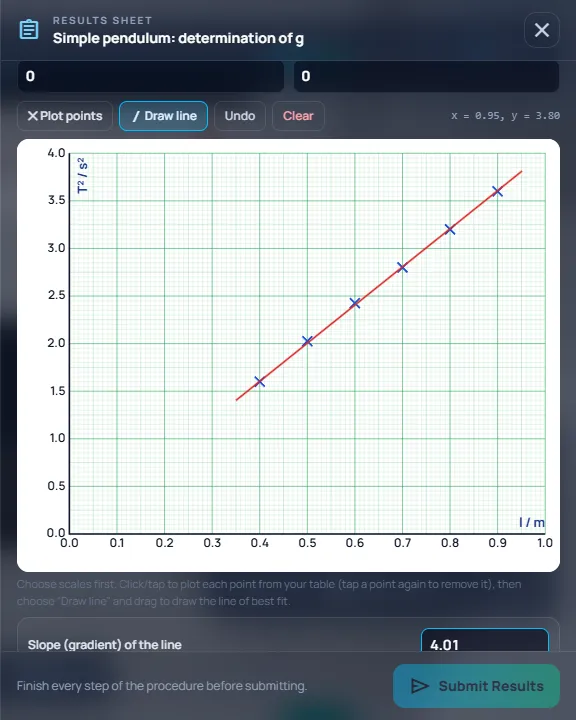
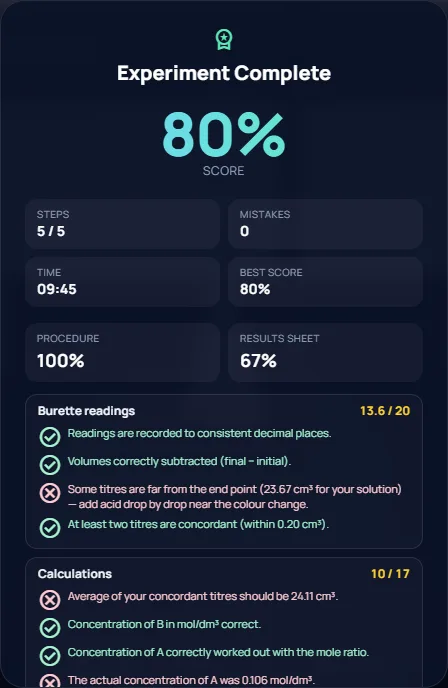
Colour changes, precipitates, gases and gas tests follow the chemistry, not a script of clicks.
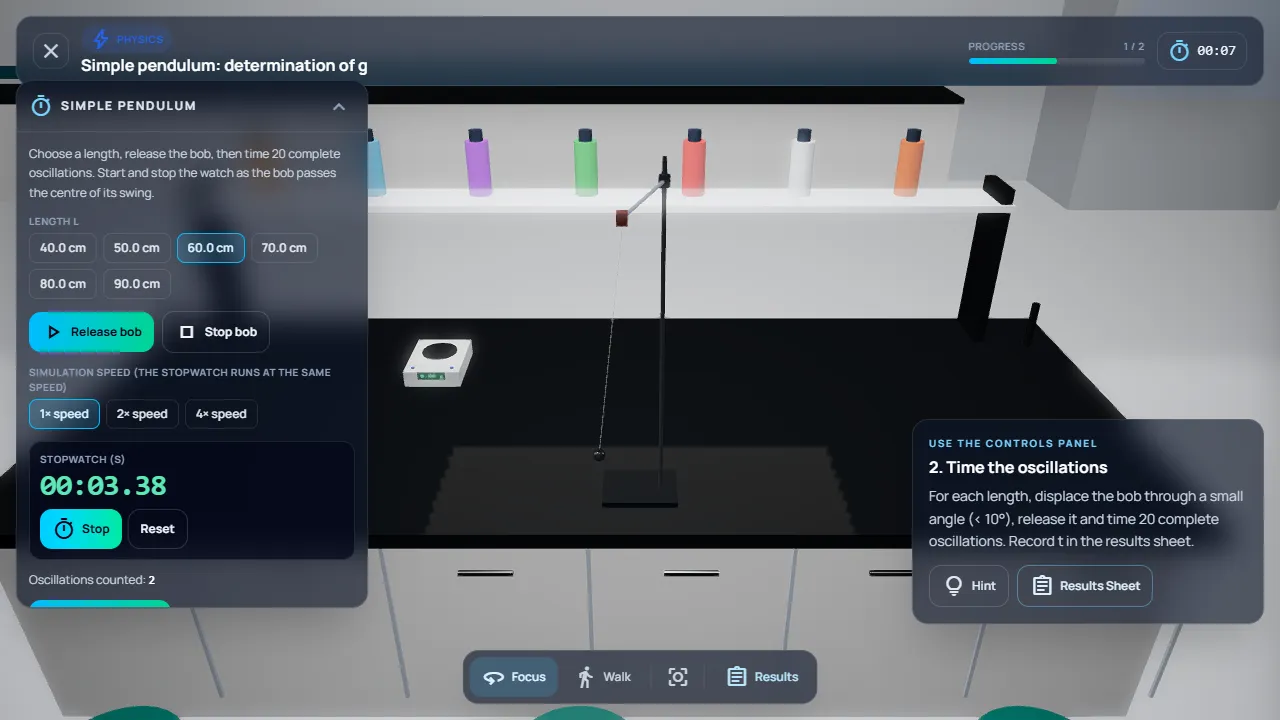
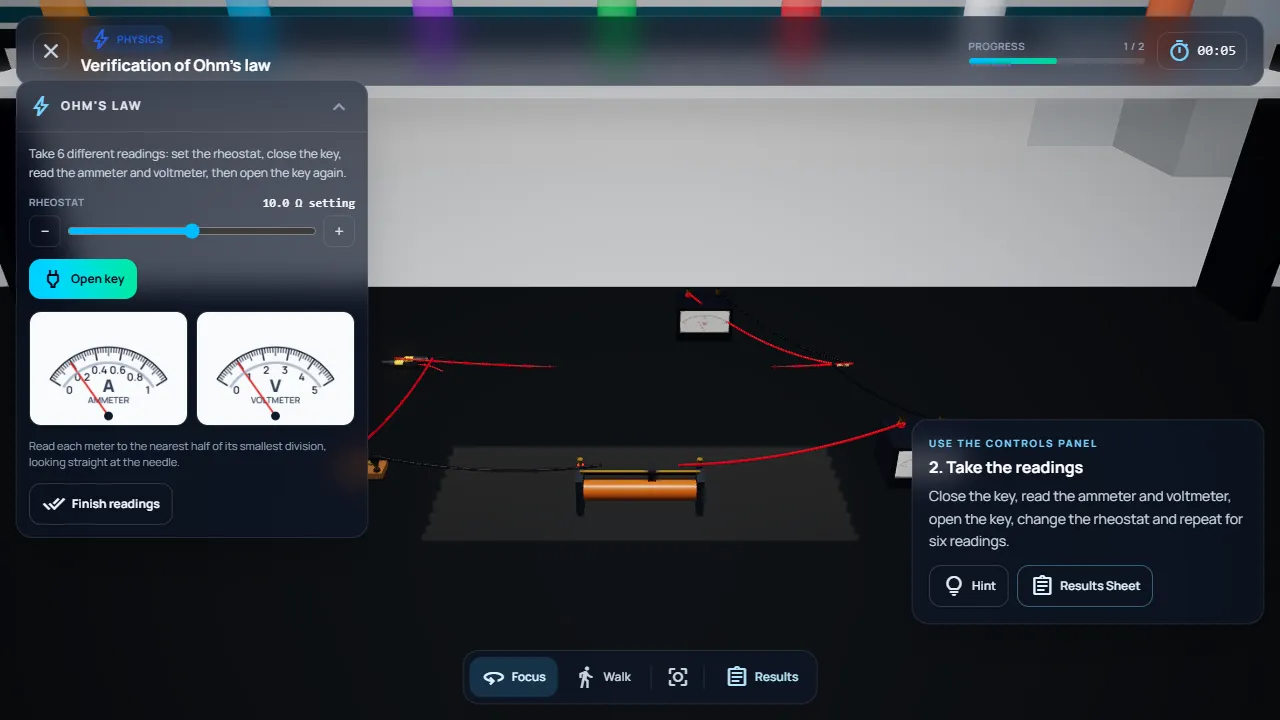
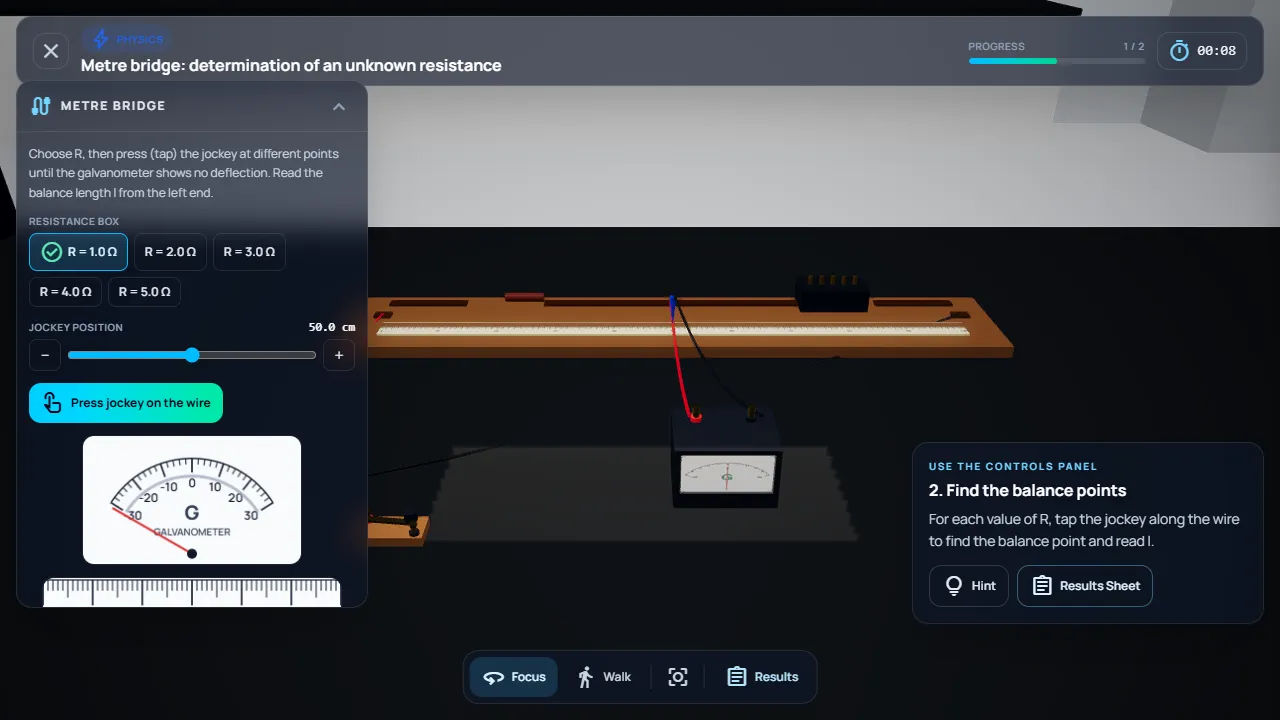
Students read burettes, metre rules, thermometers, ammeters and protractors at close range.
Tables with consistent decimal places, graph plotting, slopes and final answers, all marked.
Runs in the browser, with touch controls on phones and tablets.
Each session follows the same shape as a practical examination: procedure, observation, recording and write-up.
The student opens the practical and reads the aim, the number of steps and the time allowed before starting.
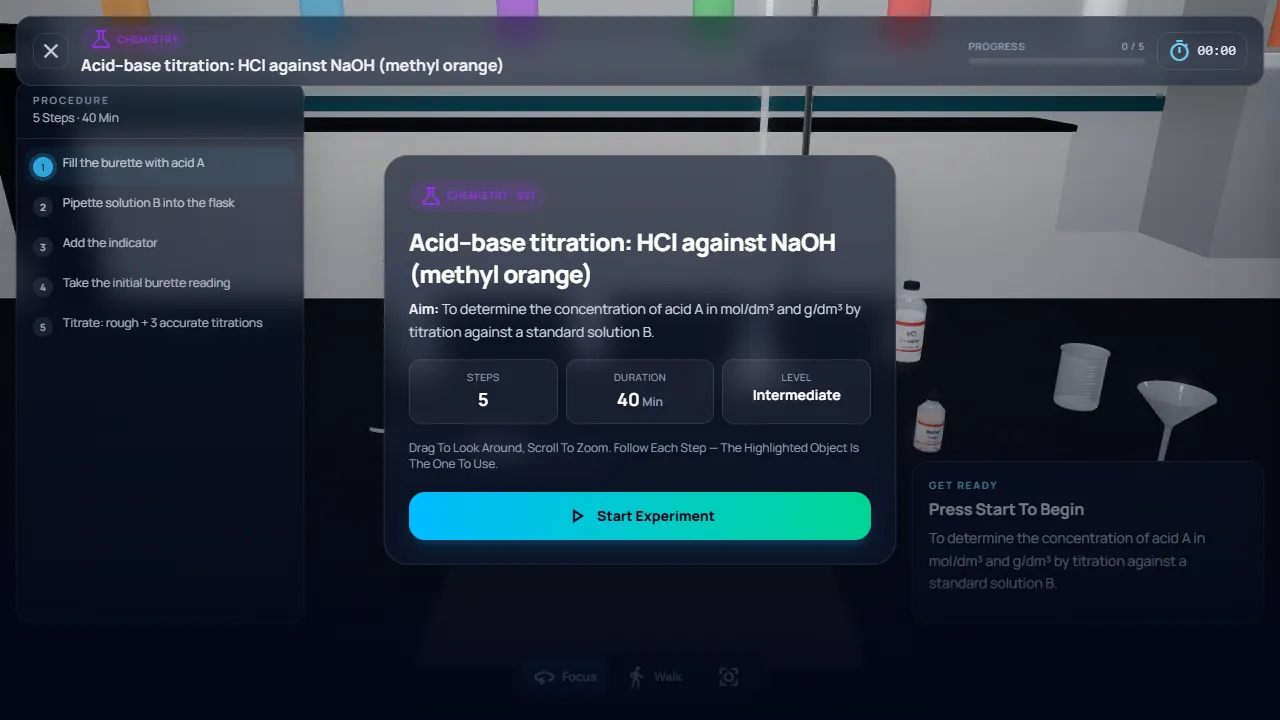
Step by step, the student uses the apparatus: fills the burette, pipettes the base, adds indicator, then titrates with the tap and single drops.
Reactions happen in the test tube: precipitates form, dissolve in excess, gases bubble and test papers change colour. Instruments are read in close-up views.
Readings go into tables, points are plotted on the graph sheet, the line of best fit drawn and the slope calculated.
The sheet is marked immediately. The student sees the score for each section and why marks were lost; the teacher sees it in the report.
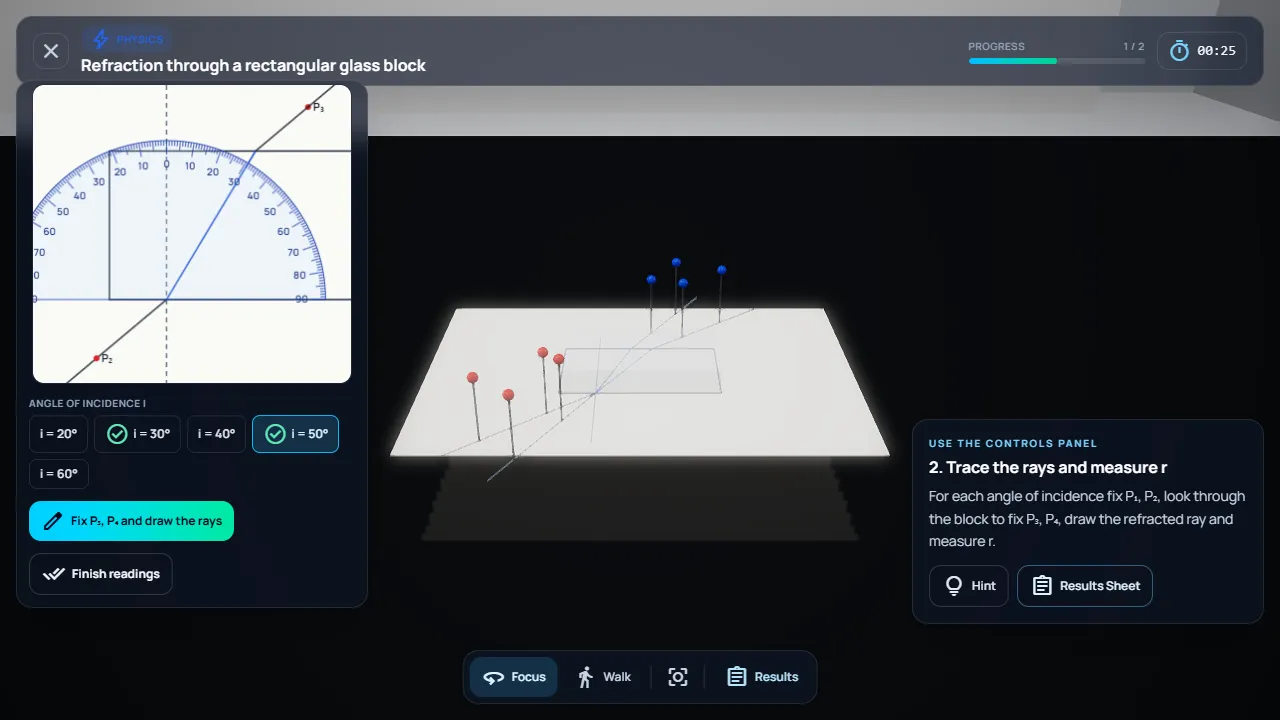
Screenshots from real sessions in the Practical Lab.
Without EduMatrix
With EduMatrix
closeReagents and apparatus shared by many students
checkEvery student has a full bench on screen
closeOne attempt before the examination, if any
checkRepeat a practical as often as needed
closeWrite-ups marked days later
checkResults sheet marked immediately, with feedback
closeBreakages and chemical costs
checkNo chemicals, no breakages
Practical examinations carry real marks in WAEC and NECO Chemistry, Physics and Biology, yet many schools cannot give every student enough time at a bench. Reagents run out, apparatus breaks, classes are large and a practical period is short. Students often meet a burette or a metre bridge properly for the first time a few weeks before the examination.
A virtual science lab does not replace the real laboratory, but it lets every student rehearse the procedure, take readings and practise the write-up as often as they need, without using a single chemical. When they get to the real bench, they already know what to do and what to record.
In the titration practicals, acid A runs from the burette into a pipetted portion of base B with an indicator. Every student gets a different unknown concentration, and the indicator only changes colour at that student's true end point, so the titre depends on how carefully they work. Near the end point the colour flashes and disappears on swirling, just as it does at the bench.
Physics practicals behave according to the physics. The pendulum swings with the period its length gives it, so the student has to time it; the lens forms a sharp image only at the right distance; the galvanometer settles at zero only at the true balance point. Most practicals give each attempt slightly different hidden values, such as the spring constant or the unknown resistor, so students cannot simply copy one another's readings.
After the procedure, students complete a results sheet. They record readings in tables, and the marking checks that each column keeps the same number of decimal places. On the graph sheet they choose scales, label the axes, plot their own points, draw the line of best fit and work out the slope or intercept. Then they complete the calculations, write their observations and inferences for the salt analysis, and choose sensible precautions such as avoiding parallax error.
The sheet is marked as soon as it is submitted, and the student sees exactly where marks were lost, for example "some titres are far from the end point" or "the y-axis scale is too small". Their score combines the procedure and the results sheet.
Teachers see every attempt in a report: score, time taken and mistakes, with each student's marked results sheet one click away. The lab is available to JSS 3 to SS 3 classes, and each experiment is assigned to the classes you choose.
Teachers and admins can also build their own experiments with the scene builder, placing apparatus from a library of 3D models (glassware, burners, electrical components, biology apparatus and chemicals) and writing the steps students must follow.
The Practical Lab is an add-on to EduMatrix and is switched on per school. Contact us to add it to your school's plan and we will set up the practicals for your science classes.
No. It lets students rehearse procedures, readings and write-ups as often as they need, so their time at the real bench counts for more.
Chemistry (titration, salt analysis, gas tests, heat and food tests) and Physics (pendulum, Hooke's law, moments, refraction, lens, cooling, Ohm's law, metre bridge). Teachers can build further step-by-step experiments, including Biology, with the scene builder.
Yes. The lab runs in the browser with touch controls. A recent phone works; older phones may be slower.
It is an add-on that is switched on per school. Contact us to add it to your plan.
CBT Exam Software
CBT exam software for Nigerian schools: build a question bank, import questions from Excel, set timed tests an...
Read the guide arrow_forwardmilitary_techJAMB/WAEC Practice
Run JAMB and WAEC-style CBT practice tests in your school: timed objective papers, instant scores and progress...
Read the guide arrow_forwardcalculateResult Management
School result management software that adds CA and exam scores, grades, positions and averages automatically,...
Read the guide arrow_forwardAsk for a live demo of the Practical Lab and we will switch it on for your school. From ₦1,000 per student per term.